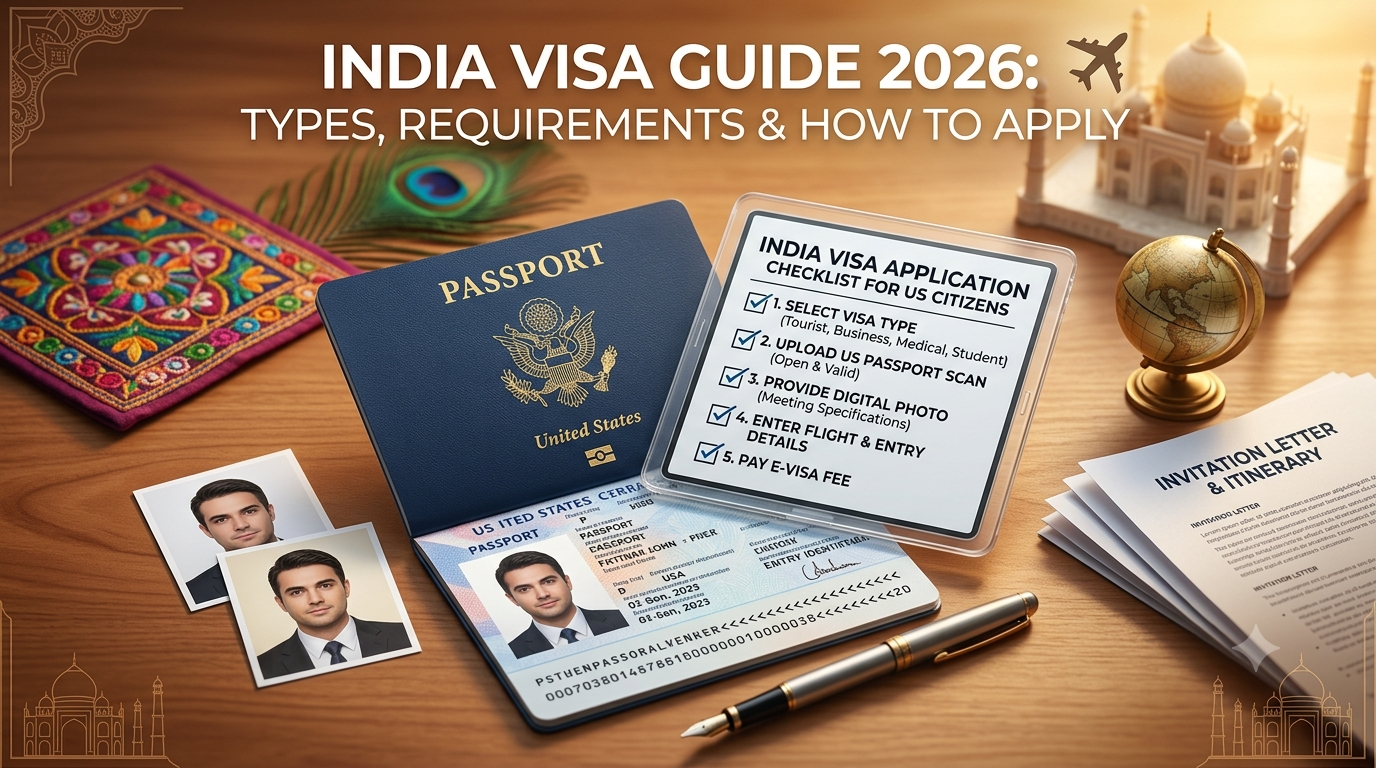
India Visa for US Citizens: Types, Requirements & How to Apply
If you're a US citizen planning a trip to India, the first real decision you'll make isn't your flight — it's figuring out which visa you actually need. India doesn't offer visa-free entry to US passport holders, and the visa system has several categories that sound similar but serve very different purposes. Picking the wrong one, or missing a document that category requires, is one of the most common reasons applications get delayed.
This guide breaks down the main India visa types available to Americans, what each one is for, and what to have ready before you start.
Do US Citizens Need a Visa for India?
Yes. Every US citizen traveling to India needs a visa in advance, regardless of the length or purpose of the trip. There's no visa-on-arrival option for US passport holders, so this isn't something you can sort out at the airport. The good news is that most travelers can apply for an e-Visa entirely online, without a trip to a consulate.
The Main India Visa Categories for Americans
1. Tourist Visa
This is the right category for sightseeing, visiting family or friends, short recreational courses (like a yoga retreat that isn't formal Ayush treatment), or general leisure travel. Tourist e-Visas are typically issued for stays of up to 90 days per visit, with some longer-validity options available depending on the sub-category you're approved for.
2. Business Visa
If you're traveling to attend meetings, explore business opportunities, attend a conference, or visit a trade fair, you'll need a Business visa rather than a Tourist one. This category usually asks for details about the inviting company in India and a clear statement of business purpose — vague or overly broad wording here is a common cause of back-and-forth delays.
3. Medical Visa
For travelers coming to India specifically for treatment at a recognized hospital or medical institution. This category typically requires a letter from the treating hospital, and stays can be extended in-country for continuing treatment.
4. Medical Attendant Visa
If a family member or companion is traveling with a patient, they apply separately under this category, with documentation that ties their trip to the patient's own Medical visa.
5. Student Visa
For travelers enrolled in a recognized educational program in India — this covers everything from semester-long university programs to shorter certificate courses, depending on the institution.
6. Ayush Visa
A newer category specifically for travelers coming to India for treatment under Ayurveda, Yoga, Unani, Siddha, or Homeopathy systems at a recognized Ayush center. It's distinct from both a Tourist visa (used for casual wellness travel) and a Medical visa (used for conventional treatment).
Documents US Citizens Typically Need
While requirements vary slightly by category, most India visa applications from the US ask for:
· A US passport valid for at least 6 months from your date of arrival, with at least two blank pages
· A recent passport-style photograph meeting India's specific size and background requirements
· Proof of purpose (invitation letter, hospital letter, admission letter, or itinerary, depending on category)
· Basic personal and travel details, including your planned port of entry
Photo and passport formatting errors are one of the most frequent causes of rejected or delayed uploads, so it's worth double-checking these before you submit anything.
How to Apply
Most US citizens apply through the e-Visa system, which involves completing an online form, uploading your documents and photo, and paying the applicable fee. Processing times vary by category and season, so it's worth applying well ahead of your travel dates rather than at the last minute — especially during peak travel months.
A Note on Where You Apply
India's visa system is run by the Indian government, and decisions on every application are made by Indian immigration authorities — not by any third-party service. Private assistance services, including this one, can help you understand which category fits your trip and review your documents for common mistakes before you submit, but they don't control approval outcomes. If a website doesn't make that distinction clearly, that's worth noticing.
How Visa Validity and Stay Duration Work
One detail that catches first-time travelers off guard is the difference between how long your visa is valid and how long you're allowed to stay on each visit. A Tourist e-Visa, for example, might carry a validity period of a year or more, but that doesn't mean you can stay in India continuously for that entire time — most Tourist e-Visas cap individual stays at 90 days, after which you'd need to exit and, depending on the sub-category, potentially re-enter. Business and Medical visas often have their own separate stay limits and extension rules. Before you book return flights or plan a long itinerary, it's worth confirming exactly what your specific visa category allows, rather than assuming "valid for a year" means "can stay for a year."
Multiple Entry vs. Single Entry
Depending on the category and sub-type you apply for, your India visa may allow single, double, or multiple entries during its validity period. This matters if your trip includes a side visit to a neighboring country — say, a stopover in Nepal or Sri Lanka mid-trip — since re-entering India afterward would require your visa to permit multiple entries. If your travel plans include leaving and re-entering India, double-check this detail before you finalize your itinerary, not after you've already left.
Can You Extend or Change Your Visa Once in India?
In some circumstances, yes — particularly for Medical visas, where ongoing treatment may require an extension beyond the original approved stay. Extensions and category changes are handled through India's Foreigners Regional Registration Office (FRRO) or online extension portal, and they're not guaranteed; they depend on your specific circumstances and documentation. It's far simpler to apply for the correct category and duration upfront than to try to convert a Tourist visa into something else after you've already arrived.
What Happens If Your Application Is Rejected or Delayed
If Indian immigration authorities have questions about your application — a document that's unclear, a detail that doesn't match your passport, or a purpose that seems inconsistent with the category you chose — you may be asked for clarification rather than an outright rejection. Responding promptly and accurately to any follow-up request is usually enough to get things back on track. Outright rejections do happen, most often when the wrong category was chosen or required documentation was missing entirely, which is why matching category to purpose matters as much as it does.
Frequently Asked Questions
Can US citizens get a visa on arrival in India? No. Unlike some countries, India does not offer visa-on-arrival for US passport holders. Your visa needs to be approved before you travel.
How far in advance should I apply? There's no single right answer, but applying several weeks before your planned travel date gives you a comfortable buffer in case anything needs correcting or clarifying.
Do children need their own India visa? Yes. Every traveler, regardless of age, needs their own individual visa — there's no "add a minor to a parent's visa" option.
Is an India e-Visa the same as a regular visa? Not exactly. The e-Visa is a specific, faster application pathway available for many (but not all) purposes of travel. Some circumstances — longer stays, certain visa categories, or specific nationalities of dual citizens — may still require applying through an Indian embassy or consulate instead.
What if my passport is close to expiring? Most India visa categories require your passport to be valid for at least six months beyond your arrival date, with blank pages available. Renewing an aging passport before you apply will save you a rejected or held application later.
The short version: match your visa to your actual purpose of visit, not the one that sounds easiest. Tourist for leisure, Business for company-related travel, Medical or Ayush for treatment, Student for enrolled programs, and Attendant visas for companions. Getting this right from the start is the single biggest thing you can do to keep your application moving smoothly — everything downstream, from document requirements to processing time to your allowed stay duration, flows from that first decision.